Google Ads can be a powerful way to attract new patients for dental implants. When done correctly they can bring in high-quality leads that convert into consultations and treatments. However, many dental practices waste thousands of dollars on campaigns that do not deliver results. The problem is rarely Google Ads themselves. The problem is strategy, targeting, and understanding how patients search for high-ticket procedures.
Why Dental Implant Ads Often Fail
Even with a decent budget many campaigns fail to produce results. Here are the most common reasons:
1. Targeting the Wrong Audience
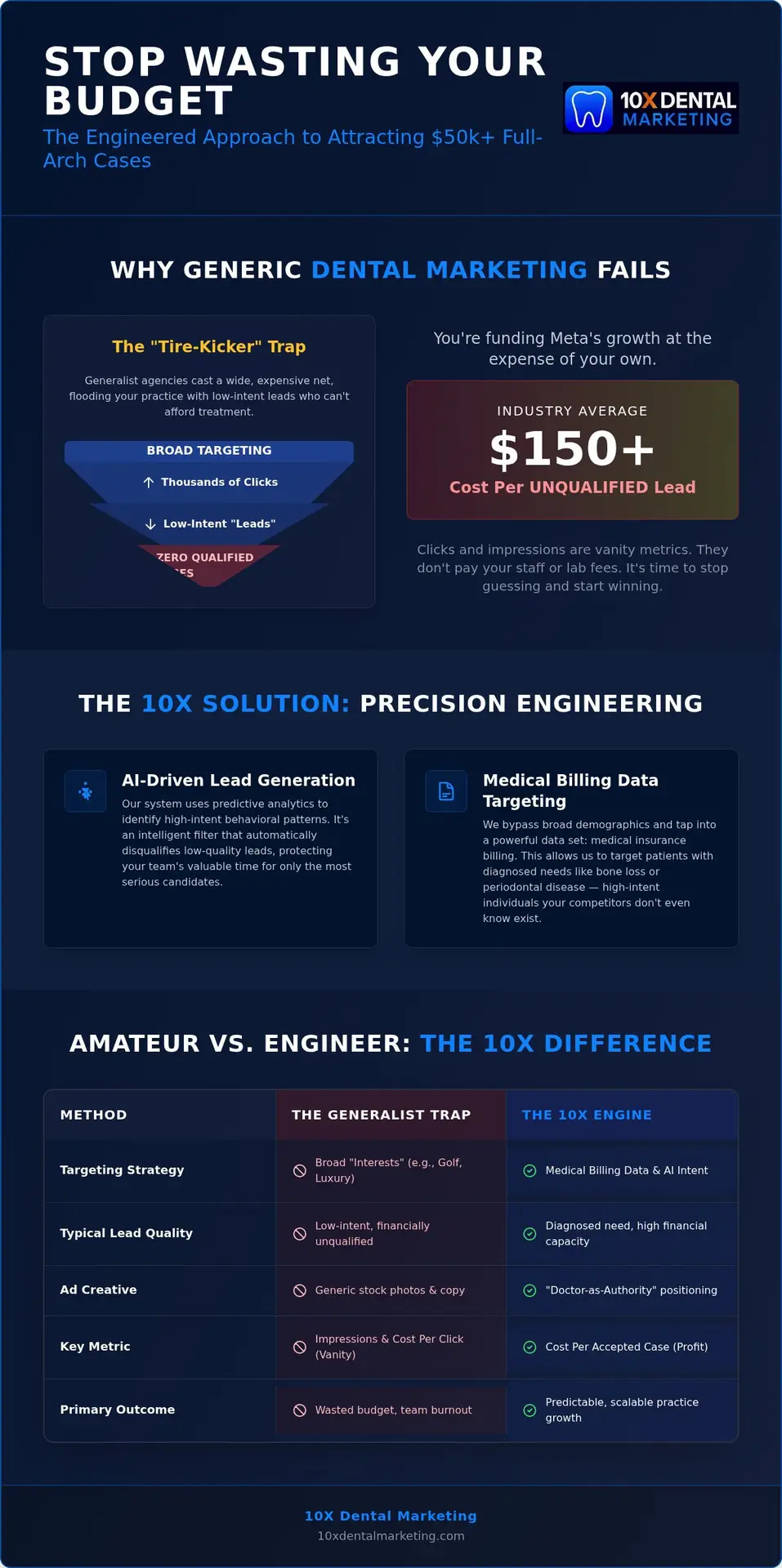
Many practices try to target everyone in their area. This approach brings clicks but not conversions. Not all patients are ready for dental implants. Successful campaigns focus on people who are searching for solutions and are likely to invest in the procedure.
2. Focusing on Traffic Instead of Conversion
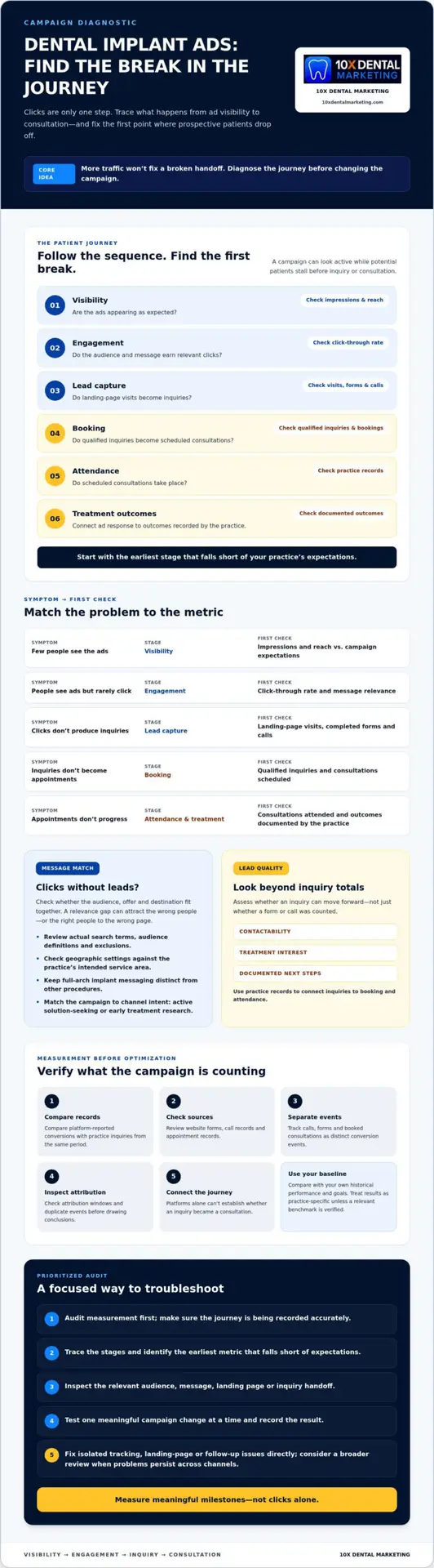
It is easy to measure clicks and impressions but these metrics do not always equal patients. Many practices pay for traffic that never schedules a consultation. Tracking conversions and optimizing campaigns for actual patient bookings is key.
3. Generic Ad Copy
Ads that are too general fail to attract serious patients. People looking for dental implants want reassurance, proof of results, and clear next steps. Ads that focus on generic messages like affordable or high-quality without addressing patient concerns often fail.
4. Poor Landing Pages
Even well-targeted ads fail if the landing page does not provide enough information. Landing pages must include procedure details, before-and-after images, patient testimonials, and clear calls to action. Pages that are cluttered or confusing reduce conversion rates.
5. Lack of Retargeting
High-ticket procedures like dental implants are not impulsive purchases. Many patients will research and compare before committing. Practices that do not use retargeting to stay visible to interested patients lose potential consultations.
How to Run Successful Google Ads for Dental Implants
Elite practices take a strategic approach. They understand the patient journey and tailor campaigns to attract qualified leads. Here is how they do it:
1. Define Your Ideal Patient
Successful campaigns start by identifying the ideal patient. Consider age dental needs income and readiness to commit. Use this information to create targeted campaigns that focus on people most likely to convert.
2. Create Specific Ad Copy
Ads should address patient pain points and highlight benefits. For example mention improved chewing confidence or long-term results. Use clear calls to action like schedule a consultation or learn how implants can restore your smile.
3. Optimize Landing Pages
Landing pages are where conversions happen. Include detailed information about the procedure steps, costs, and recovery. Use before-and-after images, testimonials, and FAQ sections to build trust and answer common questions. Make scheduling easy with clear buttons or contact forms.
4. Use Retargeting Ads
Patients rarely book on their first visit. Retargeting keeps your practice visible as they research. Display ads, reminder emails, or social media retargeting can encourage hesitant patients to schedule a consultation.
5. Track Conversions and Adjust Campaigns
Focus on conversion metrics not just clicks. Use call tracking, form submissions, or appointment scheduling software to measure results. Adjust ad targeting, copy, and budgets based on which campaigns produce the best patient leads.
Practical Tips to Reduce Waste and Increase ROI
Implementing a few strategic steps can dramatically improve campaign results:
- Target only high-intent keywords related to dental implants in your area.
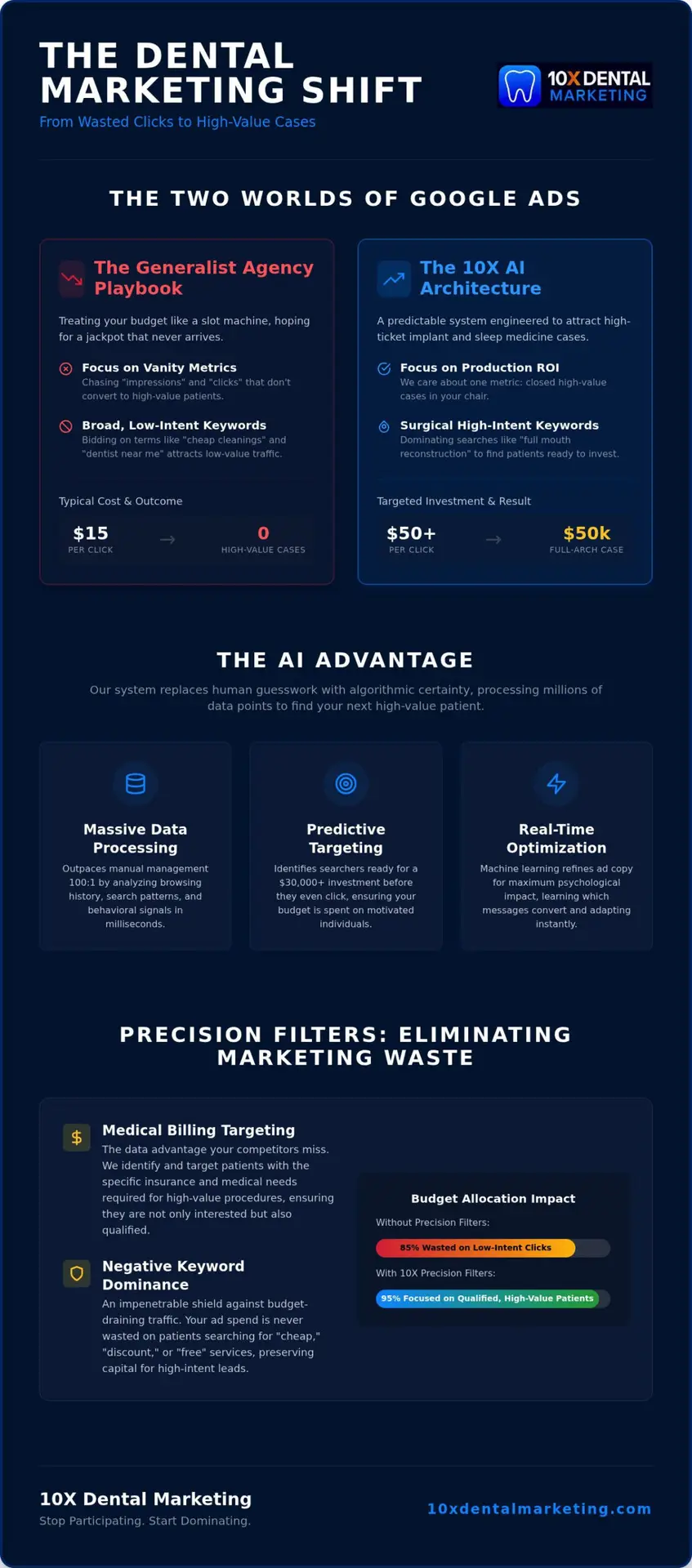
- Use negative keywords to exclude irrelevant searches.
- Set proper geographic targeting to reach local patients only.
- Test multiple ad variations to see which copy converts best.
- Use ad extensions like call buttons or location links to make it easy for patients to contact you.
- Regularly review and pause underperforming ads.
- Combine Google Ads with SEO, social media, and patient reviews to increase trust and authority.
Common Mistakes to Avoid
Even experienced practices make mistakes when using Google Ads for dental implants:
- Spending on broad keywords that attract non-serious leads
- Ignoring mobile optimization for ads and landing pages
- Focusing only on traffic metrics instead of actual consultations
- Not educating patients about implants in the ad or landing page
- Failing to follow up with leads captured through forms or calls
FAQs
Why do most dental implant campaigns fail
Most campaigns fail due to poor targeting generic ad copy and landing pages that do not convert visitors into patients.
How do I find qualified leads for dental implants using Google Ads
Target high-intent keywords focus on local audiences and create ad copy that addresses patient concerns and benefits.
Are Google Ads worth it for dental implants
Yes when campaigns are targeted, optimized for conversions, and combined with educational landing pages and retargeting strategies.
How can I reduce wasted ad spend
Use negative keywords geographic targeting, track conversions, and pause underperforming campaigns.
Can small practices compete with large dental chains on Google Ads
Absolutely by targeting local high-intent keywords, creating personalized ads, and optimizing landing pages for conversions.
How long does it take to see results from Google Ads
With proper targeting and optimization, practices often see qualified leads within a few weeks but high-ticket procedures may require multiple touch points for conversion.
Conclusion
Google Ads for dental implants can be highly profitable but only if campaigns are strategic and targeted. Many practices waste money on broad ads that generate clicks but not patients. Success requires defining your ideal patient, creating specific ad copy, optimizing landing pages, using retargeting, and tracking conversions.
Focusing on qualified leads, educating patients, and optimizing campaigns for real consultations ensures a better return on investment and sustainable growth. Dental implant marketing through Google Ads must be patient-centered strategic and measured to avoid bleeding money and to attract more high-value patients.